
Industry News & Sourcing Guides

Wholesale Apparel & Manufacturing Blog

Discover expert tips, apparel manufacturing trends, private label strategies, and B2B sourcing insights.

0%

Choosing the right Wholesale Women Leggings supplier requires more than comparing prices online. Retailers must examine fabric quality, production consistency, sizing accuracy, and communication standards. A supplier may offer attractive photos, yet the delivered leggings can feel thin, lose shape, or show uneven stitching.

Orsola de Castro, co-founder of Fashion Revolution, said, “The most sustainable garment is the one already in your wardrobe.” Her statement reminds buyers to value durability before chasing constant product turnover. For wholesale leggings, that means checking fabric recovery after stretching, colorfastness after washing, waistband strength, and seam comfort during movement. Samples matter.

Look closely.

Experienced buyers should request composition details, production lead times, minimum order quantities, and quality-control procedures. Reliable suppliers can explain where materials come from and how finished products are inspected. They should also provide clear size charts, packaging information, and realistic delivery estimates. Certifications can support trust, but they should be verified rather than accepted blindly.

This guide explores practical ways to compare Wholesale Women Leggings suppliers for boutiques, fitness retailers, and online stores. It considers cotton blends, recycled fibers, compression fabrics, private labeling, and seasonal demand. Some recommendations may not suit every business. A low minimum order can help new retailers, but it may increase unit costs. Larger orders can improve pricing, yet unsold inventory remains a real risk. The best choice depends on customer expectations, budget, and purchasing experience.
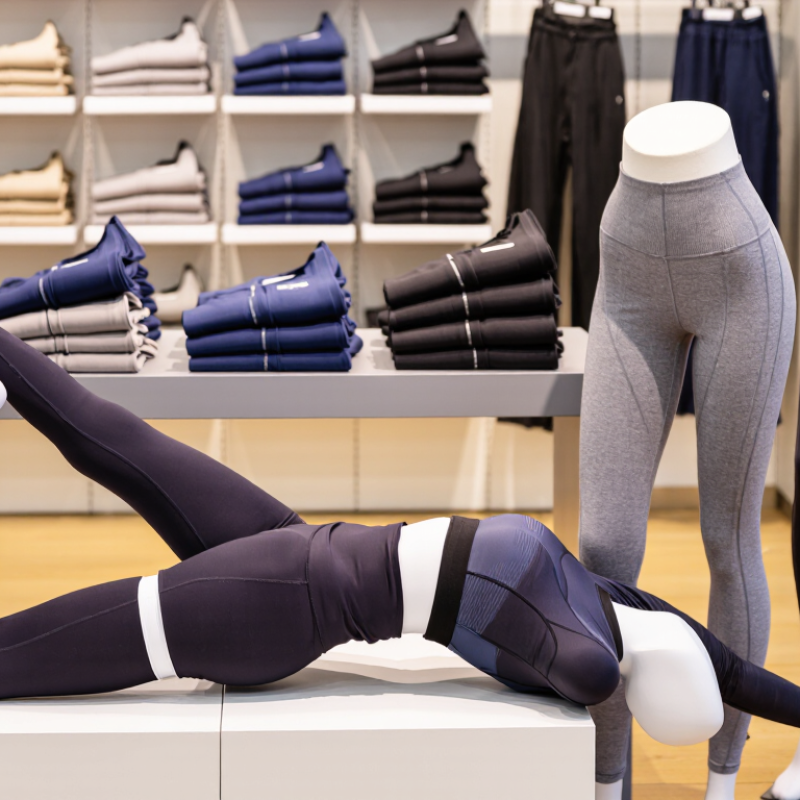
China Best Wholesale Women Leggings Suppliers?

What Defines a Reliable Wholesale Women’s Leggings Supplier in China?

A reliable wholesale women’s leggings supplier in China proves consistency before discussing price. Grand View Research valued the global leggings market at about US$38 billion in 2022, with continued growth expected through 2030. That demand can attract rushed factories. Buyers should request recent production photos, factory addresses, and verifiable business documents.

Material control matters. Textile Exchange’s 2024 Materials Market Report states that polyester made up roughly 59% of global fiber production in 2023, with continued growth expected through 2030. A dependable supplier explains fiber content, fabric weight, stretch recovery, and colorfastness. Ask for laboratory reports, not only sample swatches. Test a pair after repeated washing. The waistband should remain firm, and seams should not twist during squats.

Production discipline reveals more than polished catalogs. Confirm minimum order quantities, sample approval procedures, inspection stages, and realistic lead times. An independent inspection before shipment can check measurements, stitching, odor, labeling, and carton counts. Clear corrective-action records show professional management. Traceability is useful, too. The supplier should identify fabric mills and dyeing facilities when requested.

Experience has taught many buyers that the cheapest quote is rarely the lowest cost. Still, factory visits are not perfect evidence. A clean showroom may hide subcontracted production. I would verify capacity during a live video call and compare invoices with shipment records. Reliable communication should include quick answers, honest delays, and written specifications. Small trial orders remain wise, even when everything looks convincing.

Key Types of Women’s Leggings Available for Wholesale

China Best Wholesale Women Leggings Suppliers?

Key Types of Women’s Leggings Available for Wholesale

Wholesale buyers can choose from several practical leggings categories.

Performance leggings use nylon, polyester, or elastane blends. They suit yoga, running, and gym customers.

Seamless leggings reduce bulky seams and create a smoother fit.

Compression leggings offer firm support, but pressure levels must be clearly specified.

Cotton-blend leggings feel softer for daily wear. Thermal styles add brushed fabric for colder markets.

Maternity leggings use stretch panels around the abdomen.

The best choice depends on climate, activity, sizing, and retail positioning.

The global leggings market reached about USD 43.6 billion in 2022, according to Grand View Research. The same report projects a 5.5% compound annual growth rate from 2023 to 2030.

Fiber selection deserves attention. Textile Exchange reported that polyester represented roughly 57% of global fiber production in 2023. However, recycled content, fabric recovery, and colorfastness can vary widely. A low price is not always a strong deal. That lesson comes from repeated sample checks.

Tips: Request samples in several sizes. Test opacity under bright light. Check waistband recovery after stretching. Ask for fabric composition and shrinkage data. Review stitching after repeated washing. Do not judge fit from one model alone. A simple measurement chart reduces avoidable returns, although it cannot replace wear testing.

How to Evaluate Leggings Quality, Materials, and Manufacturing Standards

When evaluating wholesale women’s leggings, start with the fabric, not the product photos. A dependable pair usually combines nylon or polyester with elastane for stretch and recovery. Ask for the fiber ratio and test a sample after repeated washing. Pull the waistband firmly. It should return without ripples or loose threads. Check opacity under bright light and during a deep squat. That simple test often exposes weak fabric.

Quality also depends on knitting density, seam construction, and dye control. Look for flatlock or carefully covered seams at the inner thigh. They should feel smooth against skin and resist opening under tension. Inspect the gusset, waistband width, hems, and stitch consistency. A practical factory should provide fabric inspection records, measurement charts, and pre-shipment checks. Request acceptable tolerances for waist, inseam, and color variation. Vague answers deserve caution.

Manufacturing standards are visible in process discipline. Ask how workers track needle damage, shade matching, shrinkage, and final defects. Independent testing can verify colorfastness, pilling, stretch recovery, and restricted substances. Use recognized laboratory methods where possible, and link reports to the exact fabric lot. Attractive samples can still fail after washing when suppliers test only the first batch. That mistake is easy to repeat. Approve a pilot order before scaling, and compare random pieces against the approved sample. No inspection method is perfect, but documented checks make problems easier to find.

Pricing, Minimum Orders, and Customization Options Explained

China Best Wholesale Women Leggings Suppliers?

Wholesale pricing for women’s leggings depends on fabric, stitching, testing, and order volume. Basic polyester-spandex leggings often receive factory quotations of US$3–8 per pair. Higher compression, recycled fibers, or complex seams may reach US$9–15.

Grand View Research valued the global activewear market at approximately US$412 billion in 2024, showing strong demand but also intense supplier competition. A low quotation can hide packaging, inspection, or shipping costs.

Minimum orders commonly range from 100–500 pairs per color and style. Custom labels, prints, and patterns may require 300–1,000 pieces. Custom fabric development usually needs more time and higher quantities. Textile Exchange reported that polyester represented about 59% of global fiber production in 2023. Ask whether the polyester is recycled, certified, or simply described as “eco” without evidence.

Request a size chart, fabric composition, stretch recovery test, colorfastness report, and pre-production sample. I would not trust digital photos alone.

Tips: Compare landed cost, not unit price. Confirm whether quotations include FOB shipping, duties, labels, and cartons. Test one washed sample before approving bulk production. Keep written tolerances for waist width, inseam length, and logo placement. Some suppliers promise flexible customization, yet charge heavily for small revisions. That detail deserves careful questioning.

How to Verify, Compare, and Select the Right Supplier

China Best Wholesale Women Leggings Suppliers?
How to Verify, Compare, and Select the Right Supplier

Finding reliable wholesale women leggings suppliers in China requires more than comparing online prices. Ask for business registration details, factory address, production photos, and recent export experience. A video call can reveal storage conditions, cutting equipment, and quality control steps. Request samples in several sizes. Check fabric weight, stretch recovery, opacity, waistband support, seam strength, and color consistency under natural light. A polished catalog can still hide weak stitching.

Compare suppliers with the same checklist. Record unit prices, minimum order quantities, sample fees, production time, packaging details, and shipping terms. Ask whether fabric composition can be tested by an independent laboratory. Confirm size tolerances in writing. A supplier promising everything instantly may deserve closer questioning. Low prices are tempting, but fabric waste and repeated defects can raise the real cost. Do not judge quality from one sample alone.

Speak with a production manager, not only a sales representative. Request inspection records from recent orders and contactable buyer references when available. Clarify how defective items are handled before placing a deposit. Check whether the supplier can maintain the same fabric and measurements across repeat orders. Small trial orders reduce risk, although they may produce less favorable pricing. That trade-off matters. Even careful verification has limits; factory conditions can change, and my own checklist may miss details. Use independent inspection before shipment when the order value justifies it.

FAQS

What main leggings categories are available for wholesale?

Performance styles suit yoga, running, and gym customers. Seamless designs reduce bulky seams. Cotton blends suit daily wear. Thermal and maternity styles serve specific needs. Compression versions provide firmer support. Their pressure level needs clear measurement.

How should buyers choose leggings materials?

Match fabric to climate, activity, and expected retail use. Nylon, polyester, and elastane blends support stretch and movement. Brushed interiors add warmth. Recycled claims require evidence. “Eco” alone proves little.

What wholesale price range should buyers expect?

Basic polyester-spandex leggings may cost about US$3–8 per pair. Advanced compression, recycled fibers, or complex seams may reach US$9–15. These are factory quotations, not final landed costs. Prices vary.

What minimum order quantities are common?

Standard orders often require 100–500 pairs per color and style. Custom labels, prints, and patterns may require 300–1,000 pieces. Custom fabric development usually needs larger quantities and more time.

What tests should buyers request before production?

Request samples in several sizes. Check opacity under bright light. Stretch the waistband repeatedly. Review stitching after washing. Ask for composition, shrinkage, colorfastness, and stretch-recovery data. One sample is not enough.

How can buyers evaluate leggings fit accurately?

Compare waist width, inseam length, and size-chart measurements. Test more than one body shape. Check movement during squats or walking. A chart helps. It cannot replace wear testing.

Which customization details need written confirmation?

Confirm fabric, labels, patterns, packaging, and measurement tolerances. Ask about placement requirements. Small changes may cost more than expected. Digital photos are insufficient for approval.

How should buyers compare supplier quotations?

Compare landed cost, including shipping, duties, cartons, labels, inspection, and packaging. Confirm whether the quote uses FOB terms. A low unit price can hide extra costs. I would question every unclear line.

Conclusion

Choosing the right Wholesale Women Leggings supplier in China requires more than comparing prices. A reliable supplier should offer consistent communication, transparent production processes, stable capacity, quality control, and experience with international orders. Buyers can explore various styles, including workout leggings, seamless designs, high-waisted options, compression leggings, casual everyday wear, and customized products. Understanding fabric composition, stretch, thickness, colorfastness, stitching, fit, and manufacturing standards is essential for ensuring comfort, durability, and customer satisfaction.

Before placing an order, buyers should carefully review pricing, minimum order quantities, sample policies, lead times, packaging, and available customization services such as colors, labels, prints, and sizing. It is advisable to request samples, inspect product details, compare several suppliers, and confirm their quality assurance procedures and production capabilities. By evaluating these factors systematically and maintaining clear communication, retailers can select a dependable partner that provides consistent quality, reasonable costs, and flexible solutions for long-term business growth.
Amara

Amara

Amara is a seasoned marketing professional with a profound expertise in the industry, dedicated to elevating her company’s brand and product offerings. With years of experience under her belt, she possesses an in-depth understanding of the market trends and consumer behavior, which enables her to......