
Industry News & Sourcing Guides
Wholesale Apparel & Manufacturing Blog
Discover expert tips, apparel manufacturing trends, private label strategies, and B2B sourcing insights.
Discover expert tips, apparel manufacturing trends, private label strategies, and B2B sourcing insights.
A Bulk Plus Size Clothing Supplier provides retailers, boutiques, and online sellers with larger-size garments in commercial quantities. Unlike a standard wholesaler, this supplier must understand extended grading, fit consistency, fabric recovery, and practical size availability. A beautiful sample means little if the same style fits differently across a carton.
The opportunity is substantial. Grand View Research estimated the global plus-size clothing market at approximately USD 288 billion in 2023 and projected continued growth through 2030. Its analysis connects expansion with changing body-acceptance attitudes, broader retail access, and rising online purchases. Statista Consumer Insights also reports strong apparel e-commerce participation across major markets, although customer preferences differ by country and age group. These figures are useful, but not perfect. Definitions of “plus size” and market boundaries vary between reports.
For a retailer, the supplier’s value appears in specific details: accurate measurement charts, reinforced seams, breathable jersey, reliable color lots, and cartons sorted by demand. A professional Bulk Plus Size Clothing Supplier should explain minimum order quantities, production timelines, private-label options, and quality-control procedures before payment or production begins. Trade data and market reports can guide decisions, yet direct product testing remains essential. Send samples. Check movement. Ask real customers.
This article examines what these suppliers do, how wholesale purchasing works, and which standards separate a dependable partner from a merely inexpensive source. Some assumptions may need revision, especially when regional sizing and seasonal demand change quickly. That is part of the work.
What Is a Bulk Plus Size Clothing Supplier?
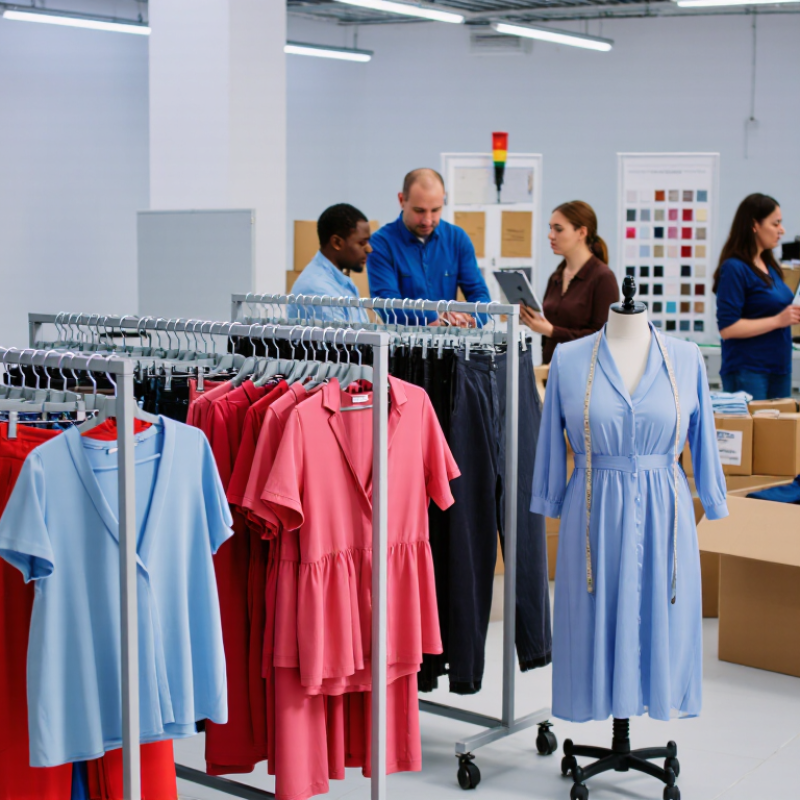
A bulk plus size clothing supplier is a business that provides extended-size garments in large quantities. These suppliers usually serve boutiques, online stores, uniform buyers, and other retailers. They may manufacture clothing directly or purchase it from approved factories.
The key difference is not only quantity. A capable supplier understands plus size grading, comfortable proportions, fabric recovery, and practical garment construction. Sizes should offer enough room across the bust, waist, hips, and upper arms. Measurements must remain consistent between production batches. In sourcing work, I have learned that a stylish sample can still fail when the sleeve feels tight or the fabric twists after washing. That detail matters.
Tips: Request a size chart, fabric details, sample pieces, minimum order quantities, and production timelines. Check stitching around stress points. Ask how defects are inspected before shipment. A low unit price can look attractive, but poor grading may create returns and unhappy customers. Suppliers should communicate clearly and provide realistic delivery information. They should also explain packaging, payment terms, and quality procedures in writing. Small misunderstandings happen, so confirm every measurement before placing a large order.
| Dimension | Definition | Practical Information |
|---|---|---|
| Core Definition | A bulk plus size clothing supplier is a manufacturer, wholesaler, or sourcing provider that supplies larger-size apparel in commercial quantities. | The supplier may provide ready-made garments, private-label production, custom manufacturing, or a combination of these services. |
| Plus Size Coverage | Plus size clothing is apparel designed with larger body measurements and specific grading, fit, and proportion requirements. | Available size ranges vary by supplier and garment type. A size chart should be reviewed because numerical sizing is not standardized across markets or factories. |
| Bulk Order Meaning | A bulk order is a purchase involving multiple units, styles, colors, or sizes for resale, distribution, uniforms, or organizational use. | Minimum order quantities are set by the supplier and may apply per style, color, fabric, or total order. The exact requirement should be confirmed before ordering. |
| Typical Product Categories | Bulk plus size suppliers may offer everyday, fashion, workwear, activewear, sleepwear, outerwear, and occasion apparel. | Product availability depends on production capabilities, season, fabric access, and the supplier’s specialization. |
| Size Grading | Size grading is the process of adjusting garment dimensions between different sizes while maintaining the intended shape and fit. | Reliable grading should consider bust, waist, hip, shoulder, sleeve, rise, inseam, and garment length measurements rather than simply enlarging a standard-size pattern. |
| Measurement Standards | Measurement standards define the body and garment dimensions used to produce and evaluate each size. | Buyers should request a complete measurement chart, tolerance information, and a sample-fitting procedure before approving bulk production. |
| Material Options | Common materials include cotton, polyester, rayon, nylon, elastane blends, denim, fleece, and other woven or knitted fabrics. | Fabric selection affects stretch, comfort, opacity, durability, shrinkage, drape, care requirements, and final cost. |
| Customization Services | Some suppliers create garments according to a buyer’s specifications instead of selling only pre-existing designs. | Customization can include pattern changes, fabric selection, color matching, labels, packaging, trims, embroidery, and printed artwork. Additional fees or minimum quantities may apply. |
| Sampling Process | A sample is a pre-production garment used to check design, measurements, materials, construction, and fit. | Buyers commonly review a development sample and, when necessary, a size-set sample before authorizing bulk production. |
| Quality Control | Quality control verifies that garments meet agreed requirements for measurements, appearance, construction, materials, and packaging. | Useful checks include measurement inspection, seam and stitch review, color comparison, fabric defect inspection, functionality testing, and final random inspection. |
| Production Timeline | The production timeline is the period required to prepare materials, manufacture garments, inspect goods, and arrange shipment. | Timing varies according to order quantity, product complexity, sampling, fabric availability, customization, seasonal demand, and shipping method. |
| Pricing Factors | Bulk pricing is the unit price offered for larger quantities or repeated commercial orders. | Price is influenced by fabric type, garment weight, construction complexity, size range, customization, order volume, packaging, payment terms, and transportation costs. |
| Size-Inclusive Inventory | Size-inclusive inventory provides a broader selection of sizes instead of concentrating only on smaller or straight-size ranges. | Buyers should confirm which sizes are available in each style and whether larger sizes use the same fabric, construction, and design details. |
| Order Documentation | Commercial apparel orders are normally supported by written specifications that describe the agreed products and terms. | Important documents may include purchase orders, measurement charts, approved samples, technical packs, packing lists, invoices, and shipping documents. |
| Best-Fit Buyer | Bulk plus size suppliers serve buyers that need multiple garments for resale, distribution, uniforms, events, or online and physical retail. | They are especially suitable for buyers that require consistent sizing, repeatable production, larger size availability, or custom product development. |
| Buyer Evaluation Criteria | A buyer evaluates whether a supplier can reliably deliver the required product, quantity, quality, sizing, and timing. | Key criteria include size-chart accuracy, sample quality, production capacity, communication, quality procedures, transparent pricing, order terms, and delivery performance. |
It provides extended-size garments in large quantities for retailers, boutiques, online sellers, and uniform buyers. Quantity is only part of the service.
Common options include dresses, tops, trousers, jackets, and seasonal basics. Orders may combine several colors and sizes.
Larger garments need balanced room across the bust, waist, hips, shoulders, and upper arms. Simply enlarging a smaller pattern may create tight armholes.
Request a size chart, fabric composition, measurements, available colors, minimum order quantity, and production timeline. Written details prevent expensive misunderstandings.
Samples reveal stitching, seam placement, fabric recovery, opacity, and comfort under normal lighting. Photographs cannot show everything.
Workers check seams, buttons, zippers, fabric defects, and finished measurements. A two-centimeter difference can change the fit noticeably.
Delayed fabric, uneven grading, inaccurate stock records, and damaged items may disrupt delivery. The process is practical, but never flawless.
Review shipping terms, defect procedures, packaging, payment conditions, care labels, and reorder availability. I would not trust a size label alone.
Compare samples with the written measurements and inspect stress points, especially sleeves, seams, waistbands, and zippers. A low price may hide poor grading.
A Bulk Plus Size Clothing Supplier is a business that provides plus size apparel in large quantities to retailers, online stores, uniform providers, event organizers, and other commercial buyers. These suppliers typically offer wholesale pricing, organized ordering processes, and inventory designed to support repeated or high-volume purchases. They may produce, source, store, and distribute clothing through catalogs, sales representatives, or online wholesale platforms, while helping customers select suitable styles and quantities.
Their product ranges can include tops, dresses, pants, activewear, outerwear, basics, and seasonal garments in extended size ranges. When choosing a Bulk Plus Size Clothing Supplier, buyers should consider size consistency, fabric quality, product variety, minimum order quantities, pricing, stock availability, delivery reliability, return policies, and communication. Bulk plus size apparel can serve many purposes, including resale, workplace clothing, community programs, group activities, special events, and inclusive retail collections. A dependable supplier should make it easier for buyers to provide comfortable, attractive, and well-fitting options for a broad customer base.