
Discover expert tips, apparel manufacturing trends, private label strategies, and B2B sourcing insights.
A wholesale triathlon suit is more than a bulk purchase for teams, clubs, or retailers. It is a technical garment designed for swimming, cycling, and running in one continuous race. The right suit must manage water resistance, body temperature, muscle support, and repeated movement. Small details matter. A rough seam can irritate skin after two hours. A loose neckline can fill with water. Weak fabric may fade after several training sessions.
Olympic triathlon champion Simon Whitfield has said, “The best equipment is the equipment you don’t have to think about.” That principle fits Wholesale Triathlon Suits especially well. A reliable supplier should offer chlorine-resistant fabric, flatlock stitching, breathable panels, secure leg grippers, and practical pocket placement. Buyers should also examine sizing consistency, sample quality, production capacity, and customization options. A low unit price can look attractive. It may hide poor compression or unstable dye.
Choosing correctly requires more than comparing catalogs. Test one sample during a swim-bike-run session. Check whether the suit stays smooth under a wetsuit. Notice if the shoulder area restricts breathing. Inspect the chamois, because excessive padding can feel uncomfortable while running. These checks reveal performance issues that product photos cannot show. Even experienced buyers can overlook them.
Wholesale ordering also involves imperfect decisions. The most aerodynamic fabric may feel too warm for hot races. The firmest compression may not suit every athlete. Start with clear performance priorities, honest feedback, and a dependable manufacturer. A well-chosen suit should support movement quietly, protect comfort, and remain consistent across an entire team’s order.
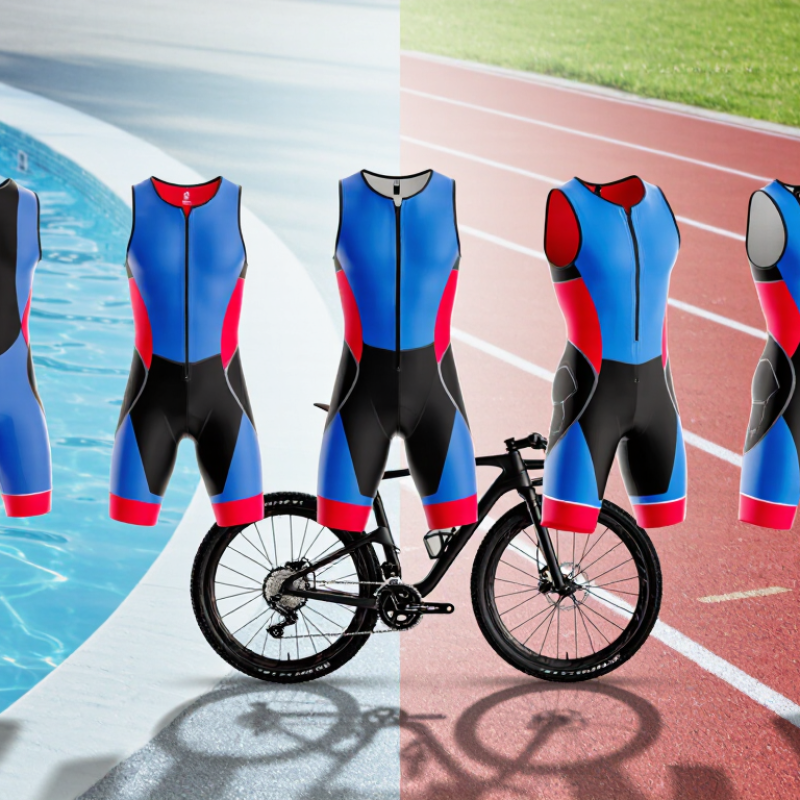
What Is a Wholesale Triathlon Suit and How to Choose One?
A wholesale triathlon suit is athletic clothing purchased in bulk for teams, retailers, clubs, or event groups. It usually supports swimming, cycling, and running in one garment. The suit may have a one-piece or two-piece design. It is not simply cheaper sportswear. Its value depends on fabric performance, construction, sizing, and production consistency.
A reliable wholesale suit should use quick-drying, stretchable fabric that feels secure without restricting breathing. Flat seams can reduce rubbing around the shoulders and inner thighs. A thin cycling pad offers comfort on the bike but should not feel heavy during swimming. Rear pockets should hold nutrition securely, while a smooth zipper should open easily with wet hands. Small details matter. Reflective elements may improve visibility during low-light training, but they cannot replace safe route planning.
Choosing a bulk order requires more than comparing prices. Request a sample and check the shoulder tension, leg grip, pad position, and zipper length. Measure the body carefully because size charts can differ between suppliers. Wash the sample several times and inspect fading, loose threads, and fabric recovery. A detailed specification sheet supports quality control and reduces misunderstandings. Check production timelines, replacement policies, and communication records before placing a large order. A low quotation can hide inconsistent sizing or delayed delivery. Perfect fit is not guaranteed. Even experienced buyers sometimes underestimate how different race-day movement feels from a fitting room.
A practical reference table for evaluating triathlon suits purchased in bulk.
| Evaluation Dimension | Definition or Typical Specification | Why It Matters | Wholesale Buying Check |
|---|---|---|---|
| Product Definition | A triathlon suit is a one-piece or two-piece garment designed for swimming, cycling, and running in the same race. | Athletes can move between disciplines without changing clothes, reducing transition time and carrying fewer items. | Confirm whether the order is for one-piece suits, two-piece sets, or a mixed assortment. |
| Fabric Composition | Common performance fabrics include nylon or polyester blended with elastane for stretch and recovery. | Stretch supports a close fit, while synthetic fibers provide faster drying than most natural fibers. | Request the exact fiber percentages, fabric weight, stretch direction, and test information before placing a bulk order. |
| Swim Performance | The fabric should fit smoothly against the body, resist excessive water absorption, and remain secure during swimming. | A stable, low-drag fit helps reduce discomfort and prevents fabric movement in the water. | Ask for sample testing in water and check opacity, seam security, and fit when wet. |
| Chamois Pad | A triathlon pad is generally thinner and quicker-drying than a traditional long-distance cycling pad. | It provides cycling comfort while minimizing bulk and retained water during the swim and run. | Check pad thickness, density, dimensions, drying time, and whether the design suits sprint or long-distance events. |
| Seam Construction | Flatlock seams place the seam edges flatter against the skin than conventional raised seams. | Flatter seams can help reduce chafing during extended cycling and running. | Inspect seam alignment, stitch density, reinforcement at high-stress points, and wash-test samples. |
| Closure System | Front or rear zippers may be used, with a zipper garage or soft covering near the neck for comfort. | A reliable zipper makes the suit easier to put on and remove while limiting skin irritation. | Test zipper operation, pull strength, seam reinforcement, and compatibility with race regulations. |
| Storage Pockets | Rear thigh or lower-back pockets are commonly used for gels, keys, cards, and other small race essentials. | Well-positioned pockets improve access without creating excessive drag or bouncing during running. | Check pocket capacity, stretch recovery, drainage, stitching, and whether contents remain secure when wet. |
| Leg Grippers | Elastic or silicone grippers help keep the leg openings in place during cycling and running. | A stable hem reduces riding up, bunching, and repeated adjustments during a race. | Check grip strength, skin comfort, width, wash durability, and performance across different leg sizes. |
| Fit and Sizing | A triathlon suit should be close-fitting without restricting breathing, shoulder movement, hip rotation, or running stride. | Incorrect sizing can cause pressure points, fabric gaps, chafing, or reduced range of motion. | Use body measurements rather than height alone and approve a size-set sample before bulk production. |
| Sun Protection | Some fabrics are tested and labeled with an ultraviolet protection factor, while others have no verified rating. | Verified ultraviolet protection can be valuable for long outdoor races and training sessions. | Do not rely on marketing claims alone; request the applicable fabric test report and care conditions. |
| Chlorine and Saltwater Resistance | Resistance varies by fiber, dye, finish, and care routine; no triathlon suit is permanently unaffected by pool chemicals or saltwater. | Better resistance helps preserve color, elasticity, and fabric strength over repeated use. | Request colorfastness and chlorine-resistance test results, and include clear care instructions. |
| Wholesale Customization | Bulk orders may support custom colors, artwork, size ratios, labels, packaging, and construction details. | Customization allows clubs, events, retailers, and teams to match specific design and fit requirements. | Confirm artwork format, color standards, sampling fees, revision limits, minimum order quantity, and production timeline in writing. |
| Quality Control | Key checks include measurements, fabric weight, color consistency, seam strength, zipper function, print adhesion, and wash performance. | A documented inspection process reduces size variation, defects, returns, and inconsistent bulk deliveries. | Approve a pre-production sample, define acceptable defect limits, and inspect finished goods before shipment. |
A wholesale triathlon suit usually combines nylon, polyester, and elastane to balance comfort, stretch, and durability. Nylon feels smooth against the skin and supports flexible movement during swimming and cycling. Polyester often resists chlorine, sweat, and repeated washing more effectively. Elastane adds controlled compression without making the suit feel rigid.
Material choice affects real race performance. A dense, close-fitting fabric can reduce water drag and limit fabric movement on the bike. Breathable mesh panels may release heat during a long run. Flatlock seams help reduce rubbing around the shoulders, waist, and inner legs. Silicone leg grippers can keep the shorts in place, but excessive grip may feel uncomfortable after several hours. Fit matters.
Wholesale buyers should request samples before placing a large order. Test the suit while swimming, sitting on a bicycle, and running in warm conditions. Check whether the fabric becomes transparent when wet. Examine stitching after washing and compare measurements across different sizes. UPF-rated fabric can help protect exposed skin, although coverage depends on the suit’s design and use. Test it wet.
No material performs perfectly in every event. A highly compressive suit may support muscles but restrict some athletes’ breathing comfort. Lightweight fabric may feel cooler but wear faster at frequent training sessions. A reliable supplier should provide fiber information, care instructions, and consistent size charts. My practical concern is simple: factory specifications are useful, but repeated wear reveals problems that a product sheet cannot.
A wholesale triathlon suit should be specified before it is priced. For wholesalers, fit, fabric, and compliance matter more than a low unit cost. World Triathlon’s 2025 Competition Rules limit wetsuit thickness to 5 mm. Therefore, suppliers must confirm thickness, seam construction, and water-temperature suitability before production. A clear specification sheet prevents expensive revisions.
Choose fabric by race conditions. A sleeveless suit improves shoulder movement but offers less thermal protection. Full sleeves provide warmth, though some swimmers may feel restricted. Look for chlorine-resistant stretch fabric, flat seams, a secure rear zipper, and a low-profile leg grip. Request fabric weight, stretch percentage, UPF test results, and size tolerances. Small details matter. A loose neckline can cause water drag.
Sizing needs real measurements, not only S, M, or L. Compare chest, waist, hip, torso length, and inseam data with target customers. I would also test three body types before approving bulk production. One sample is not enough. Textile Exchange reported that global fiber production reached 124 million tonnes in 2023. This supports asking for recycled-content documentation, but recycled fabric alone does not prove better performance. Check certificates, colorfastness results, zipper durability, and sample-wash changes. My earlier preference for maximum compression was too narrow; comfort can influence race use more than aggressive shaping.
What Is a Wholesale Triathlon Suit and How to Choose One?
A wholesale triathlon suit is purchased in volume for retailers, clubs, teams, or event programs. It usually combines swim, cycling, and running functions in one garment. Supplier evaluation should begin with evidence, not attractive photos. Check the company’s operating history, factory capacity, communication speed, and production records. Ask for a current sample before discussing large quantities. A reliable supplier should explain minimum order quantities, lead times, payment terms, and inspection procedures clearly.
Examine the sample under real conditions. The fabric should stretch smoothly without becoming transparent. Test the suit after swimming in chlorinated water and drying it in shade. Look for flat seams, secure stitching, a protected zipper, and a pad that stays stable during cycling. The leg openings should grip gently, without leaving deep marks. Check size measurements yourself because factory charts can vary. Small differences matter.
Quality control needs written details. Request fabric composition, colorfastness information, washing instructions, and production tolerances. Ask whether the supplier checks measurements from random finished pieces. Photos are useful, but physical inspection is stronger. A sample may be excellent while bulk production is less consistent. That risk is easy to underestimate. Order a limited trial batch when possible, then compare stitching, color, sizing, and packaging across several pieces. Keep records of defects and response times. A supplier who accepts reasonable corrections is often more dependable than one offering the lowest price. Mistakes still happen, even with careful planning.
A neutral 100-point scorecard for evaluating wholesale suppliers and triathlon suit product quality.
Product construction and fabric performance receive the highest weights because they directly affect durability, comfort, aerodynamics, and performance in swimming, cycling, and running. Use the remaining categories to assess sampling, traceability, sizing consistency, and delivery reliability before placing a wholesale order.
A wholesale triathlon suit is a bulk purchase for clubs, retailers, teams, or event organizers. Unlike a retail order, it usually involves size runs, custom graphics, and production planning. Pricing changes with fabric weight, zipper quality, padding, printing method, and order volume. The Grand View Research Sports Apparel Market report valued the global market at about USD 203.4 billion in 2023, with projected growth through 2030. That scale creates options, but it also makes supplier comparison harder.
Ask for a clear price ladder. A small trial order may cost more per suit, while larger orders reduce unit pricing. Minimum order quantities often range from 20 to 100 pieces, depending on customization and factory capacity. Confirm whether samples count toward the final order. Also check development fees, packaging, freight, taxes, and replacement terms. The Textile Exchange Materials Market Report 2024 reported polyester at roughly 59% of global fiber production in 2023. This supports broad material availability, but recycled content still requires verification.
Request fabric composition, stretch testing, colorfastness results, and a pre-production sample. Measure chest, waist, inseam, and torso length before approving a size chart. A spreadsheet helps, but it can miss real fitting problems. I have seen teams approve attractive samples that failed during long rides. Not every low quote is economical. Build a landed-cost comparison, inspect stitching, and leave time for one imperfect production correction.
It is a one-piece garment bought in volume for teams, clubs, retailers, or event programs. It supports swimming, cycling, and running.
Request operating history, factory capacity, production records, and communication details. Ask for a current physical sample. Attractive photos are not enough.
Check smooth stretch, opacity, flat seams, secure stitching, zipper protection, and stable padding. Examine the leg openings for gentle grip. Deep marks suggest poor fitting.
Wear the suit during swimming and cycling. Rinse it after chlorinated water, then dry it in shade. Check whether colors fade or fabric loses shape.
Factory size charts can vary noticeably. Measure chest, waist, inseam, and torso length. A spreadsheet helps, but it can miss real fitting problems.
Ask for fabric composition, stretch results, colorfastness information, washing instructions, and production tolerances. Request evidence of random finished-piece inspections.
Build a landed-cost comparison. Include unit price, sample fees, packaging, freight, taxes, and possible replacements. The lowest quote may not be cheapest.
Custom orders often require approximately 20 to 100 pieces. Confirm whether samples count toward the final order. Ask about size runs and custom graphics.
Yes, when possible. Compare several pieces for stitching, color, sizing, and packaging. Keep defect records and response times. Small errors can grow quickly.
Clear terms, realistic lead times, written inspections, and reasonable corrections are positive signs. Perfect planning is impossible. I would still allow time for one imperfect production correction.
Wholesale Triathlon Suits are designed for businesses, teams, clubs, and retailers that need performance-focused apparel in larger quantities. A quality suit typically combines a streamlined fit, supportive construction, breathable panels, quick-drying fabric, UV protection, and practical features such as a secure zipper and comfortable leg grippers. Common materials include blends of polyester, nylon, and elastane, selected for their stretch, durability, moisture management, and resistance to repeated washing. These features help athletes stay comfortable and move efficiently through swimming, cycling, and running.
Choosing the right suit requires evaluating sizing, fabric weight, seam construction, padding or chamois design, customization options, and intended race conditions. Buyers should compare suppliers by reviewing samples, production consistency, quality-control procedures, communication, delivery schedules, and return policies. Pricing should be considered alongside minimum order quantities, customization fees, shipping costs, and long-term durability rather than judged by unit price alone. Clear specifications and a reliable supplier can help ensure consistent quality and better value for bulk purchases.