
Discover expert tips, apparel manufacturing trends, private label strategies, and B2B sourcing insights.
Why Choose Wholesale Men Flannel Shirts for Global Retail? The question reflects changing apparel economics, not only seasonal style. Textile Exchange’s Materials Market Report 2024 recorded global fiber production at approximately 124 million tonnes in 2023. It also projects continued growth toward 2030. This scale increases pressure on retailers to select practical, durable products. Wholesale Men Flannel Shirts can support that decision with recognizable texture, flexible layering, and broad styling potential. A brushed cotton shirt can move from a warehouse rack to a weekend outfit without complicated merchandising.
The business case is more detailed than appearance. McKinsey and The Business of Fashion’s State of Fashion 2025 describes cautious consumer spending and continuing margin pressure. Buyers therefore need products with reliable sizing, repeatable fabric quality, and manageable order planning. Check the fabric weight. Inspect the seam density. Confirm colorfastness after washing. These small checks matter. A supplier should provide composition details, measurement charts, sample approval, and transparent production timelines. Retailers can then test core colors, such as charcoal, navy, and forest green, before expanding seasonal patterns.
Still, flannel is not automatically a perfect choice. Heavy fabric may increase freight costs, while inconsistent brushing can create customer complaints. Sustainable claims also require evidence, not attractive wording. Textile sourcing teams should verify certifications and documentation independently. That is where professional judgment matters. Wholesale Men Flannel Shirts offer commercial potential, but only when design, quality control, pricing, and responsible sourcing work together. Sometimes, a smaller first order is wiser.
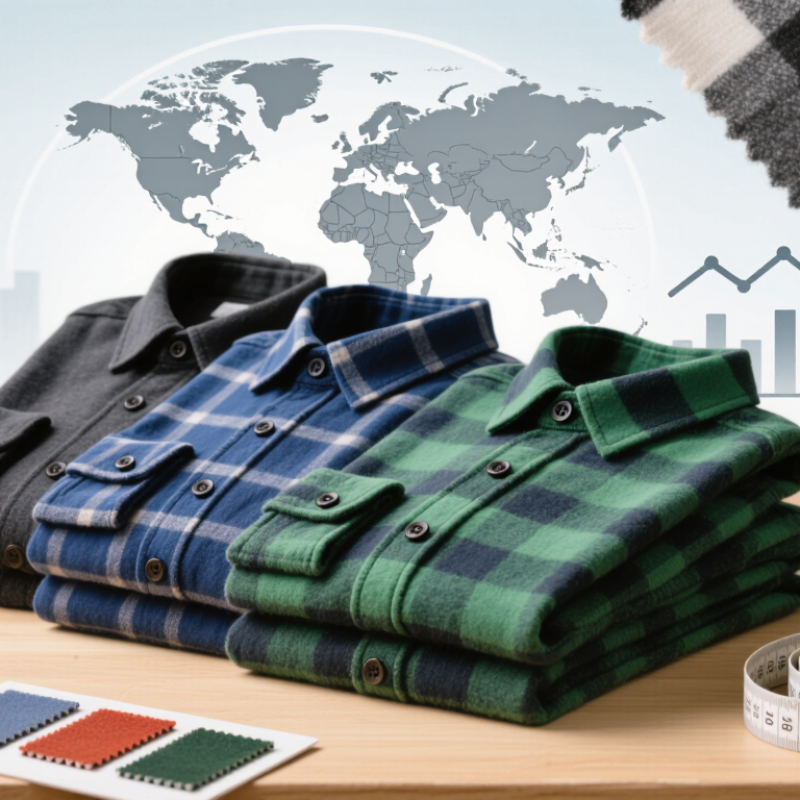
Wholesale men’s flannel shirts are bulk-purchased, ready-to-sell garments designed for retail distribution. Buyers usually negotiate unit prices, minimum order quantities, size ratios, colors, fabric weight, and packaging. Unlike retail purchasing, wholesale sourcing requires technical checks before production.
Flannel is not simply “a checked shirt.” It is a woven fabric, commonly cotton or a cotton blend, finished with brushing for a soft, slightly raised surface. A practical sampling range is about 150–250 grams per square meter. Lighter fabric suits warmer markets, while heavier cloth feels better in cold regions. Shrinkage, colorfastness, seam strength, and pilling should be tested after washing. Small details matter.
The Textile Exchange Materials Market Report 2024 recorded global fiber production at 124 million tonnes in 2023, with projections reaching 160 million tonnes by 2030. This scale shows why material documentation and traceability increasingly matter to international buyers. Grand View Research also estimates the global apparel market will continue expanding through 2030. However, growth does not guarantee a good flannel program. A low quotation may hide weak buttons, unstable sizing, or excessive fabric waste. I have found that a physical sample often reveals more than a polished specification sheet. The word “flannel” can still be used too loosely.
For global retail, flannel quality begins with fiber selection, not styling. Cotton flannel feels breathable and familiar across many climates. Wool flannel holds warmth better, but it may require stricter care instructions. Cotton-rich blends can reduce cost and improve shape recovery. However, cheaper blends sometimes feel harsh after repeated washing.
Textile Exchange’s Materials Market Report 2024 states that global fiber production reached 124 million tonnes in 2023. Polyester represented about 57%, while cotton accounted for approximately 22%. This scale makes fiber traceability increasingly important for wholesale buyers. Ask suppliers for fiber composition, origin records, and laboratory test results. Small details matter. A 180–220 GSM fabric often suits lightweight retail shirts. Heavier 240–300 GSM options provide stronger insulation and a more substantial hand feel.
Brushing quality defines the surface. Even brushing creates a soft nap without bald patches or excessive fuzz. Tight weaving improves durability around cuffs, collars, and pocket edges. Check shrinkage after laundering, especially with cotton fabrics. AATCC TM61 testing can help evaluate colorfastness during accelerated washing. Deep red, navy, and black shades deserve extra testing. They can bleed or fade unevenly.
In practical wholesale inspections, I also examine seam density, button attachment, and collar recovery. These features are easy to overlook. No fabric choice is perfect. A soft shirt may pill sooner, while a durable one may feel less luxurious. Retailers should compare comfort, testing evidence, care demands, and target climate before placing large orders.
Retailers choose wholesale flannel shirts for practical reasons. They offer familiar styling, steady seasonal demand, and flexible merchandising. A checked flannel shirt can hang beside denim, workwear, or casual trousers. Retailers can also test several colors without committing to high individual-unit costs. According to the 2024 Materials Market Report from Textile Exchange, cotton represented about 22% of global fiber production in 2023. That broad material familiarity supports customer trust. Still, demand is not automatic. Poor sizing or heavy fabric can leave racks full after winter.
Wholesale buying also helps retailers manage price points. Bulk purchasing can improve margins, especially when suppliers provide mixed sizes and coordinated colorways. Flannel’s brushed surface gives customers a clear tactile experience in-store. That detail matters. The 2024 ThredUp Resale Report projected the global secondhand apparel market could reach 350 billion dollars by 2028. Durable, wearable shirts may retain stronger resale appeal, although quality must be proven rather than assumed. Stitch density, shrinkage control, and fabric weight deserve inspection before larger orders.
Tips: Request samples before placing volume orders. Wash one shirt twice and measure shrinkage. Check collar recovery, button security, and sleeve length. Keep core colors conservative, but test one seasonal shade. Wholesale is efficient, not risk-free. Data guides the purchase, while local customer behavior should make the final decision.
Wholesale men’s flannel shirts help retailers answer seasonal demand without committing to excessive inventory. Grand View Research estimates that the global apparel market reached about $1.7 trillion in 2023. That scale rewards flexible suppliers and practical product planning. Flannel works across autumn, winter, and transitional weather. Retailers can sell it as a shirt, overshirt, or lightweight jacket.
Wholesale programs also support regional assortment choices. A retailer in Canada may need heavier brushed fabric, while a warmer market may prefer lighter-weight cotton. Textile Exchange’s Materials Market Report 2024 recorded approximately 124 million tonnes of global fiber production in 2023. Polyester represented about 57%, while cotton remained a major natural fiber. This data shows why buyers should compare fiber content, fabric weight, and finishing methods before ordering. Small details matter.
Reliable suppliers provide size charts, color samples, production timelines, and pre-shipment inspections. Buyers should check seam strength, button attachment, shrinkage, and color consistency. One missed detail can create expensive returns. Wholesale pricing is useful, but the lowest quote is not always the safest choice. That lesson is easy to ignore. I have seen attractive samples fail when bulk fabric changed slightly. Retailers should request repeat samples and confirm tolerances in writing. Clear communication helps wholesale flannel shirts meet different retail calendars, customer expectations, and replenishment needs.
When retailers source wholesale men flannel shirts globally, supplier selection starts with product evidence, not a low quote. Ask for fabric composition, weight, yarn quality, and a physical sample. A shirt that feels soft in a showroom may pill after repeated washing. Check shrinkage after three wash cycles. Check colorfastness under light and rubbing. Small details matter. Collar shape, button strength, seam density, and pocket alignment affect returns. Request a measurement chart with tolerances, then compare it with your target market’s sizing.
Reliable suppliers explain their production capacity, quality checkpoints, and realistic lead times. Request recent inspection records, factory photos, and documentation for material safety and worker protections. Verify these details independently when possible. A polished presentation is not proof. It is only a starting point. During sampling, test several sizes and colors, including darker plaids that may bleed. Discuss minimum order quantities, replenishment speed, packaging, and shipping terms before signing. Clear written specifications reduce misunderstandings across time zones.
Price still matters, but landed cost matters more. Include freight, duties, testing, rework, and possible delays in the calculation. I once treated a generous sample as proof of stable bulk quality; that assumption was weak. A pre-shipment inspection would have exposed the risk earlier. Suppliers should accept corrective-action discussions and keep batch records. They should also communicate bad news quickly. That habit is valuable. Retailers may need flexible forecasts, but suppliers need firm approval dates. A balanced relationship supports consistent flannel weight, sizing, and delivery, even when demand changes.
Cotton offers breathability and familiar comfort. Wool provides more warmth but may require careful washing. Cotton-rich blends can improve shape recovery and reduce costs.
Lightweight shirts often use 180–220 GSM fabric. Heavier 240–300 GSM fabric feels warmer and more substantial. Climate matters.
Inspect the surface for an even, soft nap. Avoid bald patches, excessive fuzz, or rough areas. The fabric should feel consistent across the shirt.
Check seam density around cuffs, collars, and pockets. Examine button attachment and collar recovery. Small details often reveal production quality.
Fiber traceability supports better purchasing decisions. Request composition details, origin records, and laboratory test results. Guesswork can become expensive.
Wash one sample twice, then measure its dimensions. Review color changes during accelerated washing tests. Deep red, navy, and black need extra attention.
Wholesale purchasing can improve margins and offer mixed sizes. Flannel also works beside denim, casual trousers, and workwear. Demand is steady, not guaranteed.
Poor sizing, heavy fabric, and harsh blends can slow sales. A soft shirt may pill sooner. A durable shirt may feel less luxurious.
Keep core colors conservative, such as navy or neutral checks. Test one seasonal shade in a smaller quantity. Local customer behavior should guide expansion.
No. Samples matter. Test fit, shrinkage, buttons, sleeves, and fabric feel before ordering deeply. I might still underestimate local preferences.
Wholesale Men Flannel Shirts are practical, versatile apparel products designed for retailers seeking reliable options for different markets. They are commonly made from cotton, cotton blends, or other woven fabrics that provide softness, warmth, breathability, and durability. Quality is also reflected in details such as fabric weight, brushed texture, color consistency, strong stitching, comfortable collars, functional pockets, and dependable buttons. With a range of patterns, fits, and sizes, flannel shirts can serve casual, outdoor, workwear-inspired, and seasonal collections.
Retailers choose wholesale purchasing because it can provide competitive pricing, consistent supply, flexible order quantities, and broader product variety. For global retail demand, wholesalers can support different climate needs, customer preferences, and sales channels through adaptable designs and production planning. When selecting suppliers, buyers should evaluate material quality, sizing accuracy, manufacturing capacity, lead times, packaging, communication, quality control, and responsible business practices. A dependable supplier should also offer clear product information and stable fulfillment, helping retailers reduce sourcing risks and build a sustainable, market-ready flannel shirt collection.